Did You Know?
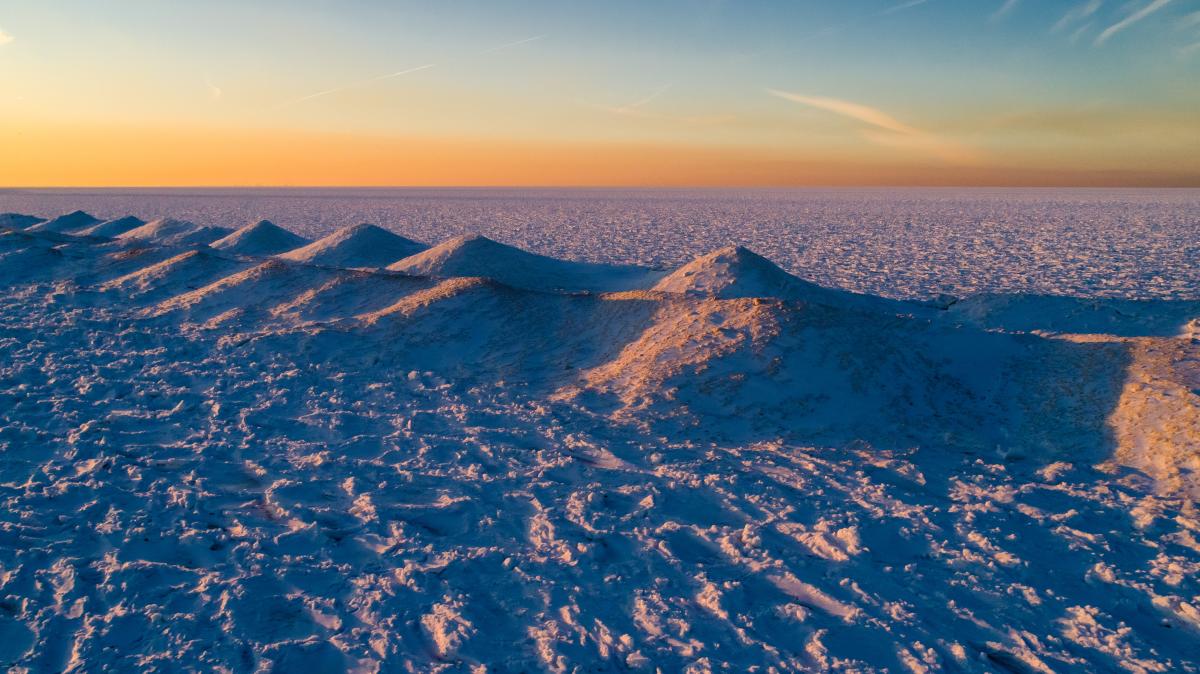
Mount Baldy is one of the few "living" dunes in North America, moving five to ten feet every year. Driven by wind, weather, and time, this ever-changing landscape has been reshaping itself for thousands of years. Every visit offers a slightly different view of one of the Indiana Dunes' most iconic landmarks.
How Mount Baldy Was Formed
Like all of the Indiana Dunes, Mount Baldy is a constant reminder of the awesome power of glacial movement during the last ice age. Over 10,000 years ago, the glaciers retreated north, leaving behind massive amounts of soil and sediment. Wind and the waters of what would eventually become Lake Michigan worked to form dunes like Mt. Baldy, which were stabilized by trees, grasses, and shrubs.
Mount Baldy's story didn't end when the glaciers retreated. The dune's shape, movement, and even its layers of buried soil continue to reveal how wind, water, and time have shaped this remarkable landscape.
Why Mount Baldy Has Its Unique Shape
Parabolic dunes form when strong, steady winds break through a patch of vegetated sand and carve out a hollow called a blowout. As wind rushes through this opening, it deepens and stretches the shape, while plants along the edges hold the sides in place—locking in the dune’s distinctive curved form.
The Hidden Story in the Sand
About halfway up many of the dunes, you’ll notice a dark stripe running across the sand. That line is called a paleosol—it’s an old soil layer that formed about 3,500 years ago. It shows where an ancient, stable dune once sat before newer sand buried it over the last century.
Seeing this layer helps scientists understand how the dunes move, spot hidden hazards like hollowed-out tree remains, and learn how climate changes shape the landscape over time.
How Wind Shapes the Dunes
On windy days, you can actually watch this process on the slip face of Mount Baldy, as sand skims over the crest and pours down the other side. Scientists call this process saltation, the primary way sand dunes move and change shape. Wind can push sand slowly along the ground, lift it into the air, or—most commonly—bounce it along in short hops just above the surface. This creates a steady stream of fast-moving grains that gradually reshape the dune.
Hike the Mount Baldy Summit Trail
The 0.75-mile shaded trail leads to Mount Baldy Beach, where visitors can enjoy spectacular views of Lake Michigan and the park's famous moving dune. While climbing Mount Baldy is no longer permitted to protect both visitors and this dynamic landscape, the beach offers an unforgettable perspective of this iconic natural landmark.
Ready to experience Mount Baldy for yourself? Follow this easy trail to the beach for spectacular views of Lake Michigan.
Marvelous Plants of Mt. Baldy
Marram Grass
Marram grass might not catch your eye, but it’s one of the most important plants on the dunes at Mount Baldy. It actually thrives in sand and even needs to be buried now and then to stay healthy. Its deep roots help hold the dunes together and keep them from blowing away. Thanks to recent restoration efforts, marram grass has helped stabilize the foredune, slowing sand movement—and it’s now spreading on its own.
Cottonwood Trees
Another humble but mighty resident here is the cottonwood tree. It is uniquely suited for Mt. Baldy. Not only can these trees withstand being buried in sand, but the leaves have adapted to spin around on their stems, allowing high lake winds to pass through their branches.
The Ghost Forest of Mount Baldy
Ancient Trees Buried By a Moving Dune
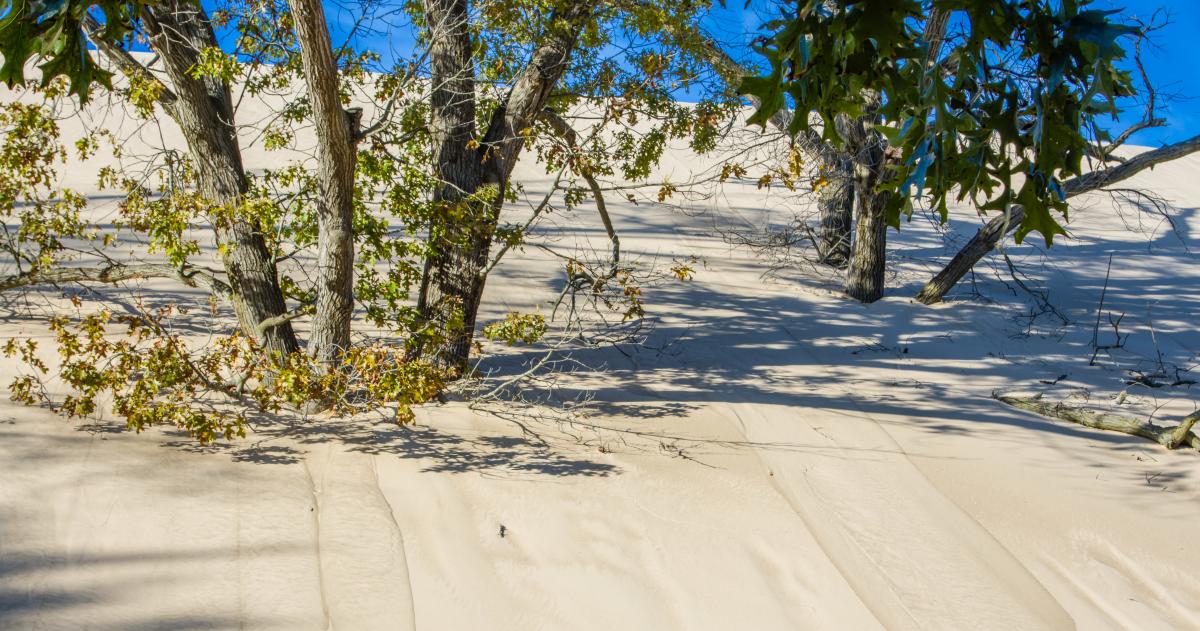
Visitors to Mt. Baldy might be surprised by the sight of half-buried trees protruding from the sand. These bare branches are signs of what rangers call a “ghost forest,” remnants of trees that have been buried over the years by the continual migration of this “living” dune. While they may look sturdy, these trees are actually decomposing under the surface. They are vivid reminders of the dynamic environment of Mt. Baldy.
What to Expect
The spacious, paved parking lot brings you directly to a stunning view of the slip face of Mount Baldy. For your safety and to protect the dune, climbing is not permitted—please respect all posted fencing and signage.
The trailhead is located on the west side of the parking lot, just off the entrance road to the left. This sandy 0.75-mile trail leads straight to the beach. Please remain on the designated trail at all times and do not attempt to climb Mount Baldy from any side.
Location: 101 Rice Street (U.S. Highway 12), Michigan City, IN 46360
- National Park Pass Required
- Open daily from 6:00 am to 11:00 pm
- .75-mile hike to beach
- Not wheelchair accessible
- Year-round restrooms and potable water
- First come, first-served picnic shelter and tables
Visiting Mount Baldy Safely
Trail Safety
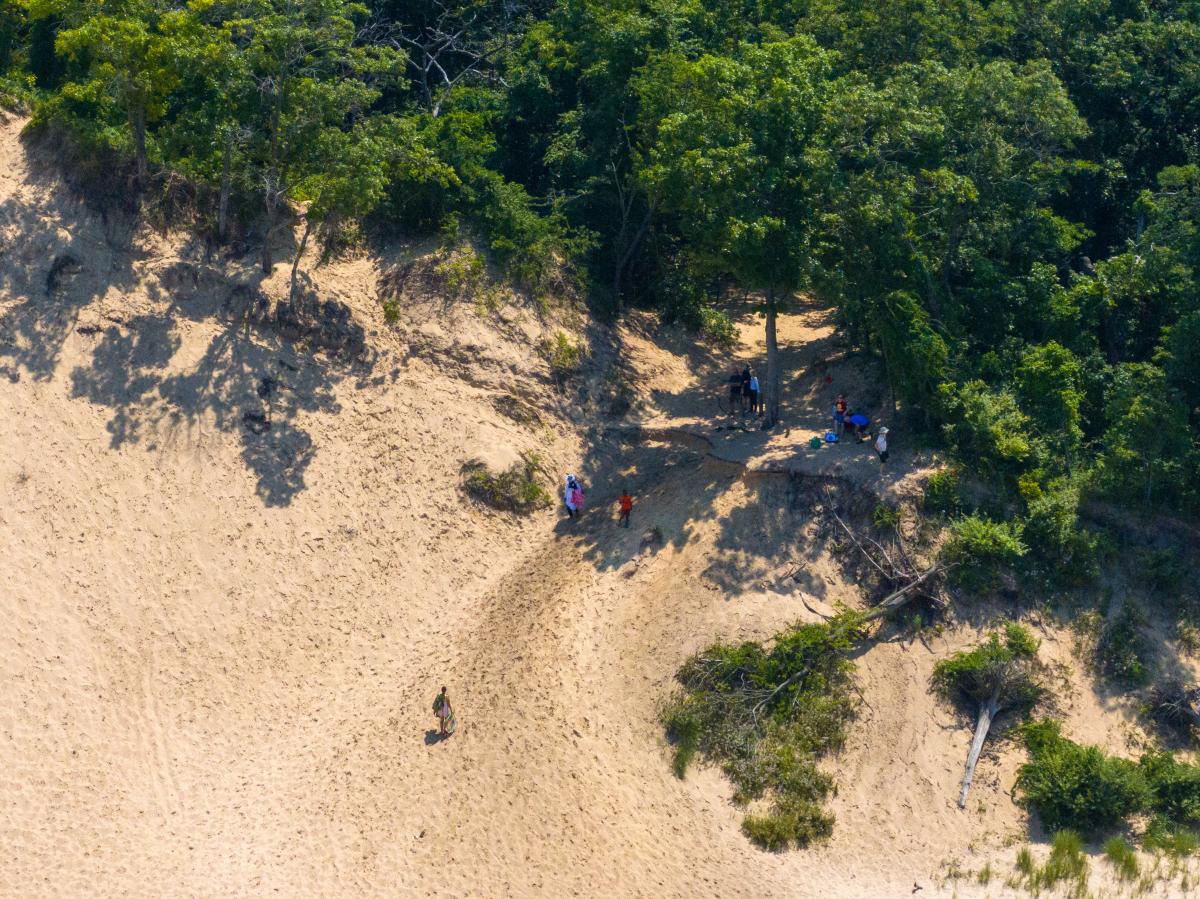
Hikers are advised to use caution when hiking the beach trail that leads to Mount Baldy’s beach. The shoreline and dune are in constant motion from weather and lake levels. The summit of Mount Baldy remains closed except for ranger-led programs.
Mount Baldy is one of the largest lakefront sand dunes in the world. To preserve and protect this natural wonder for generations to come, it’s extremely important that guests stay on the designated trails and respect closed area signs. Walking on undesignated paths contributes to damaging erosion of the dune and destroys marram grass, which helps to stabilize Mount Baldy.
Poison Ivy and Ticks
Poison ivy and poison oak can also grow alongside the trail, so please wear appropriate clothing and footwear. Learn to identify poison ivy and oak using Purdue University's handy guide.
Visitors should also look out for ticks year-round. It’s recommended that guests wear repellent containing DEET and take other precautions to prevent bites, such as wearing light-colored clothing, hats, and tucking their pants into their socks.

Swimming Safety
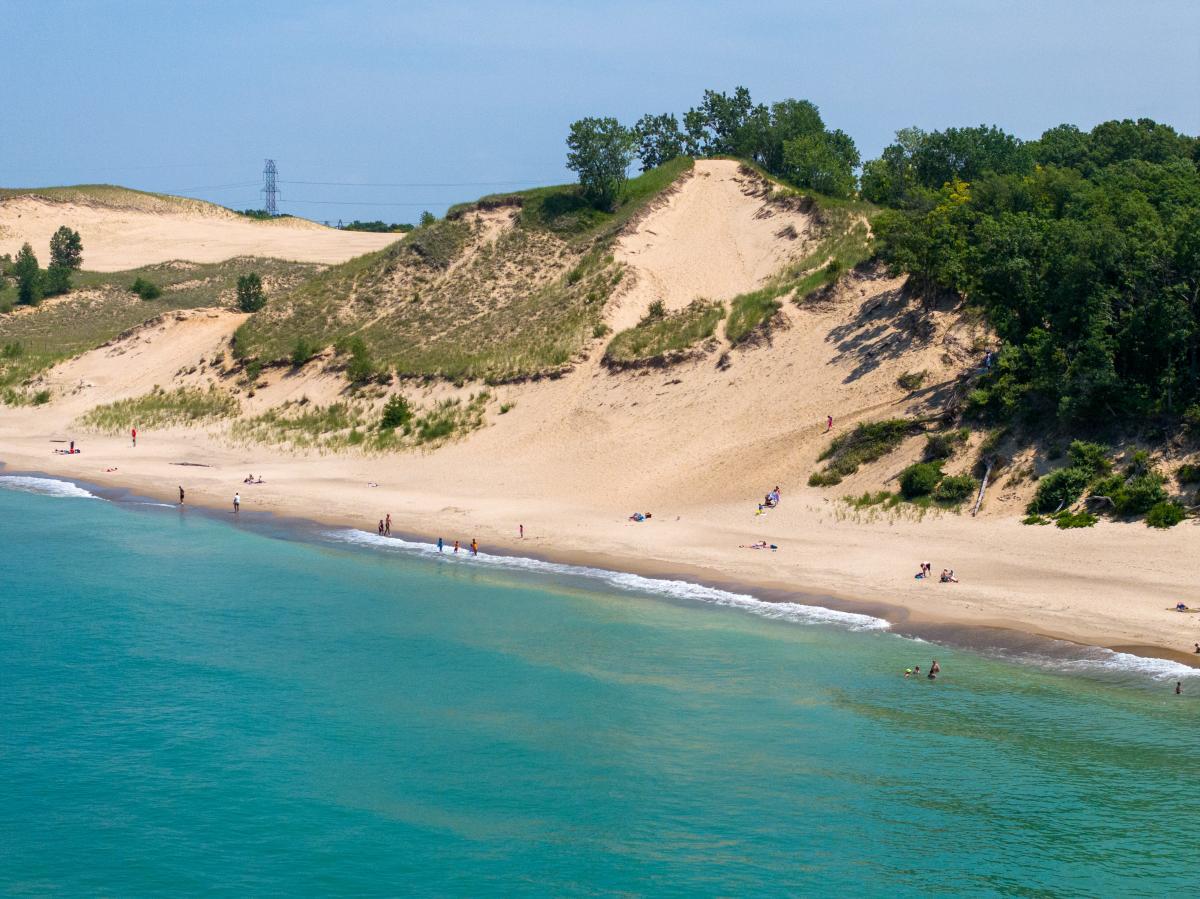
Beachgoers can enjoy sunbathing at this quiet beach setting. However, guests should be aware that no lifeguards are present at this beach location. Guests should avoid swimming when large waves are present, as a rip current may occur, which can make swimming deadly.
Shelf Ice Dangers
In the winter, guests will see shelf ice along Lake Michigan. Although the ice may look stable, it's actually quite fragile. Walking on the ice can cause it to break, allowing a person to fall into the frigid waters of Lake Michigan.